


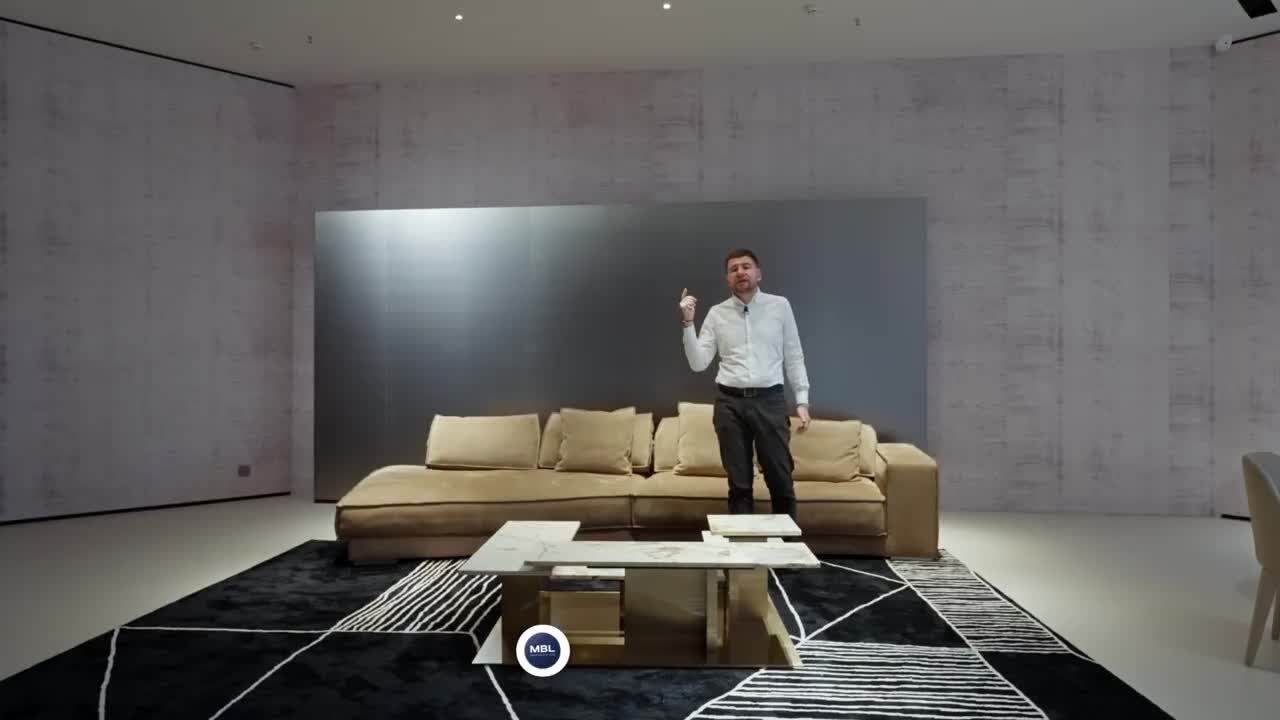
The logic of "the bigger the plant, the more reliable" works poorly in the Chinese furniture market. We visited factories of different sizes — from fifty people to five hundred — and the difference turned out to be not size but who is responsible for your specific item.
Fifty people who don't sell retail
One of the factories where we filmed has been operating for ten years and has fifty staff. It doesn't sell retail at all — only to sourcing managers and project companies. Yet it recently opened a 6,000 square metre showroom, investing two million dollars in it.
Where does such a level come from at a small factory? The showroom was built thanks to a top manager who left a large company and brought two things with him: a client base and a technical one. Italian patterns with every detail, usually found only at big factories, ended up at a small one.
The main advantage: you don't have to fight for quality
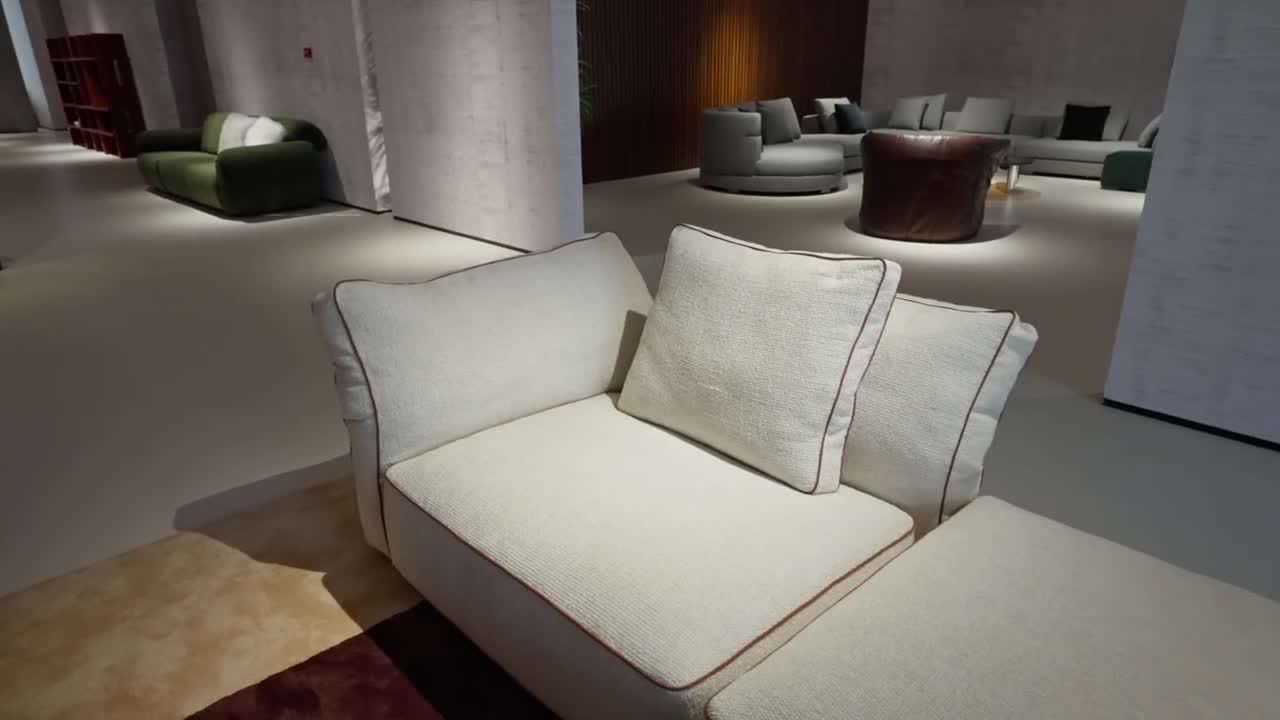
A small manufacturer makes minor changes at your request and controls them itself. Changing the seat height, depth, module length or front color is a routine task for them, not an exception to the production flow.
At a large company you have to fight for high quality on your particular pieces. Not because they work worse there: your order is simply one of hundreds in a shift, and there's physically no one who keeps it all in mind.
There are dozens, even hundreds of such small factories in Foshan. They, not the showroom, determine the result — and that's why we don't bring furniture "from China" but from specific factories.
Three hundred people and only projects
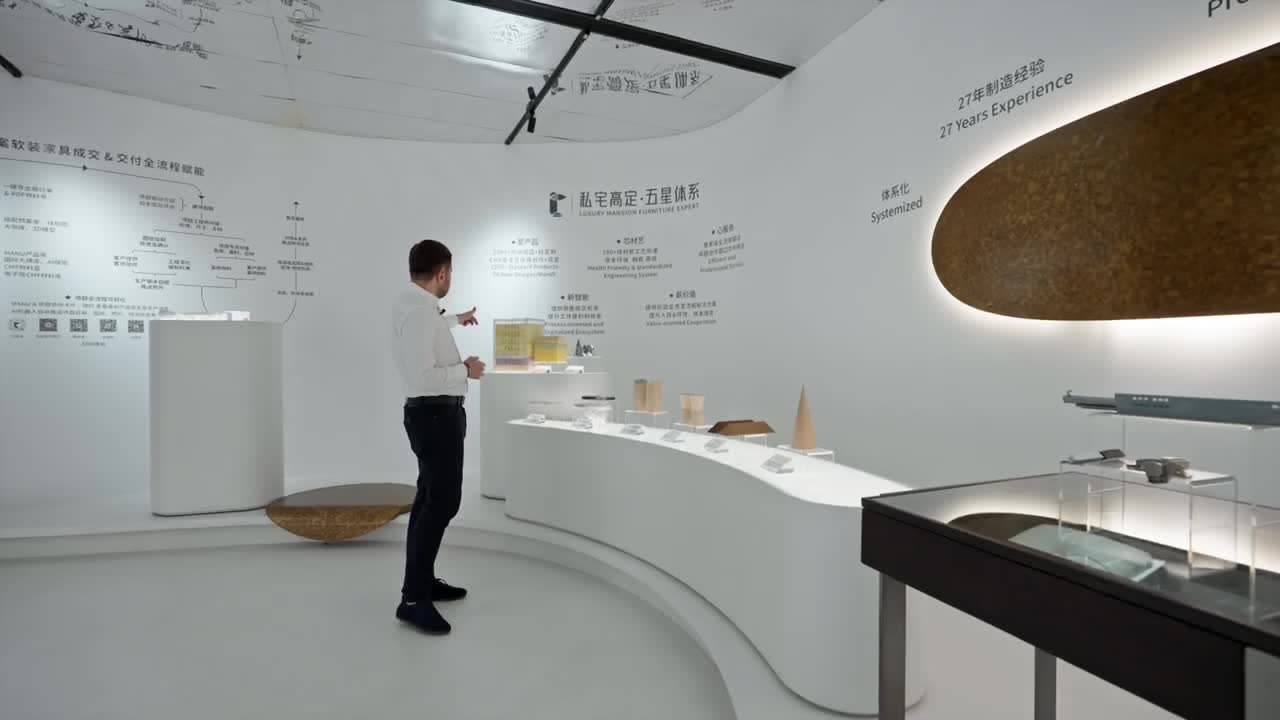
Another factory, operating since 1998, has three hundred staff and does everything by hand. It doesn't focus on wholesale — it works only on projects. Hence the attention to detail: a display board with part numbers for all components, German hardware, a specification with material densities.
It's the same principle as in the first case, just at a different scale: a manufacturer that isn't chasing volume can afford to fuss over details.
When a small factory is a problem
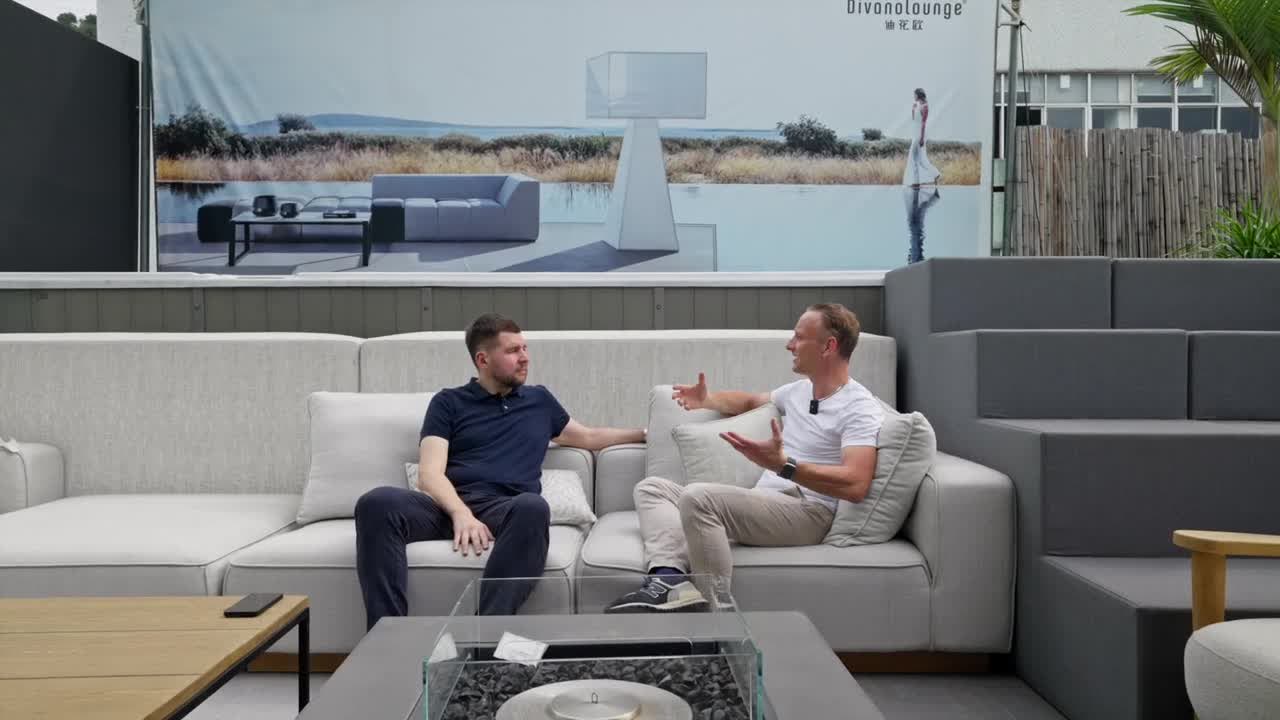
There's a flip side. An outdoor furniture producer a hundred kilometres from Foshan works only by the container: the minimum order is one container. A client who needs one set for a terrace isn't welcome there.
We spent a separate visit on negotiations and secured an individual approach — but that's the work of an intermediary, not a property of the factory. Go there on your own and you'll hear "wholesale only" and leave empty-handed.
When scale is justified
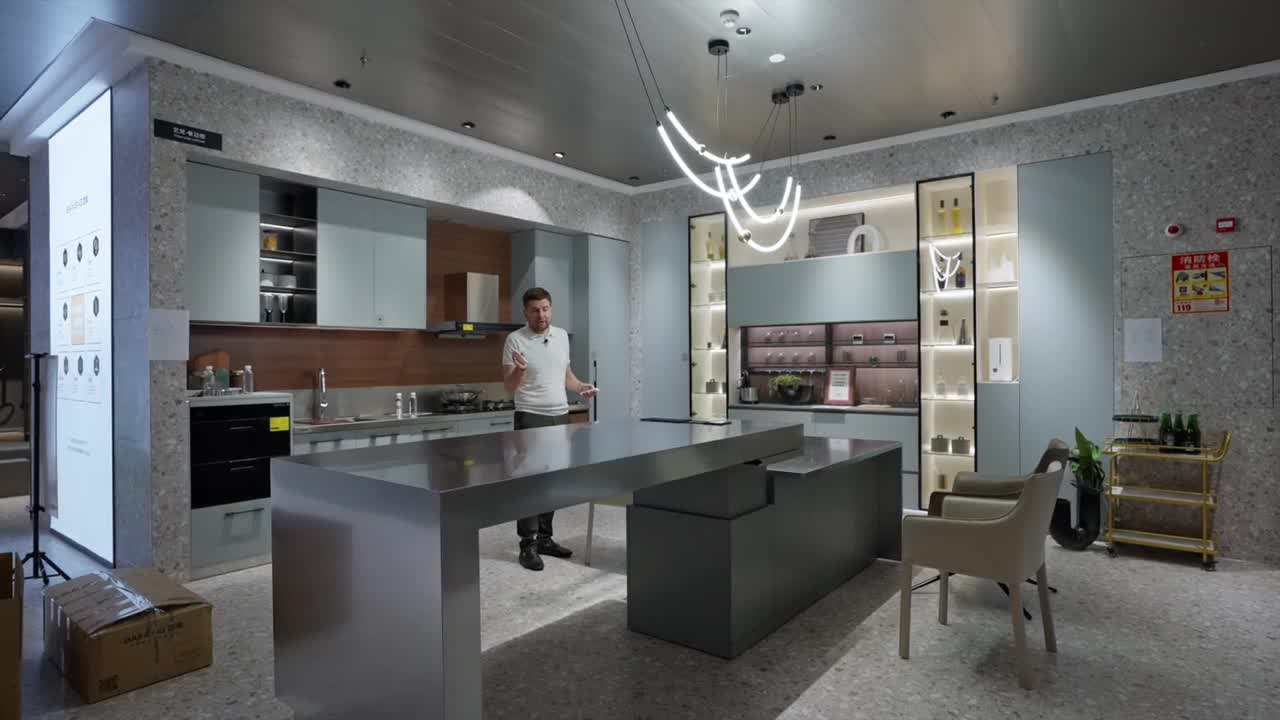
The opposite example is a stainless steel cabinet furniture plant: a hundred thousand square metres of production space and five hundred people. Here the size is justified because production runs in a full cycle: metal, bending, welding, coating, assembly. A small workshop couldn't handle that, and it wouldn't give a fifty-year warranty.
So the question isn't whether a factory is big or small, but whether its scale matches the task. Upholstered furniture and custom casework are the territory of small producers. A full metal cycle is the territory of big plants.
How to check this without visiting
- Ask whether the factory sells retail. If it doesn't and works with sourcing managers, that's a good sign, not a suspicious one.
- Ask them to change one dimension of a model. "We don't do that" at a small factory means they have no designer-engineer of their own.
- Check the minimum order. If it's a container, you need someone who can negotiate.
- Ask about the part numbers of the hardware and padding. A manufacturer with nothing to hide shows them on its own.
Before every shoot at a new factory, our team of sourcing managers visits and studies the production. We're responsible for every choice you make in China — that's why we go ourselves.
Send us a list of items or your design project: we'll find a manufacturer for the task, not for the showroom. An estimate of 15 items is free.


