


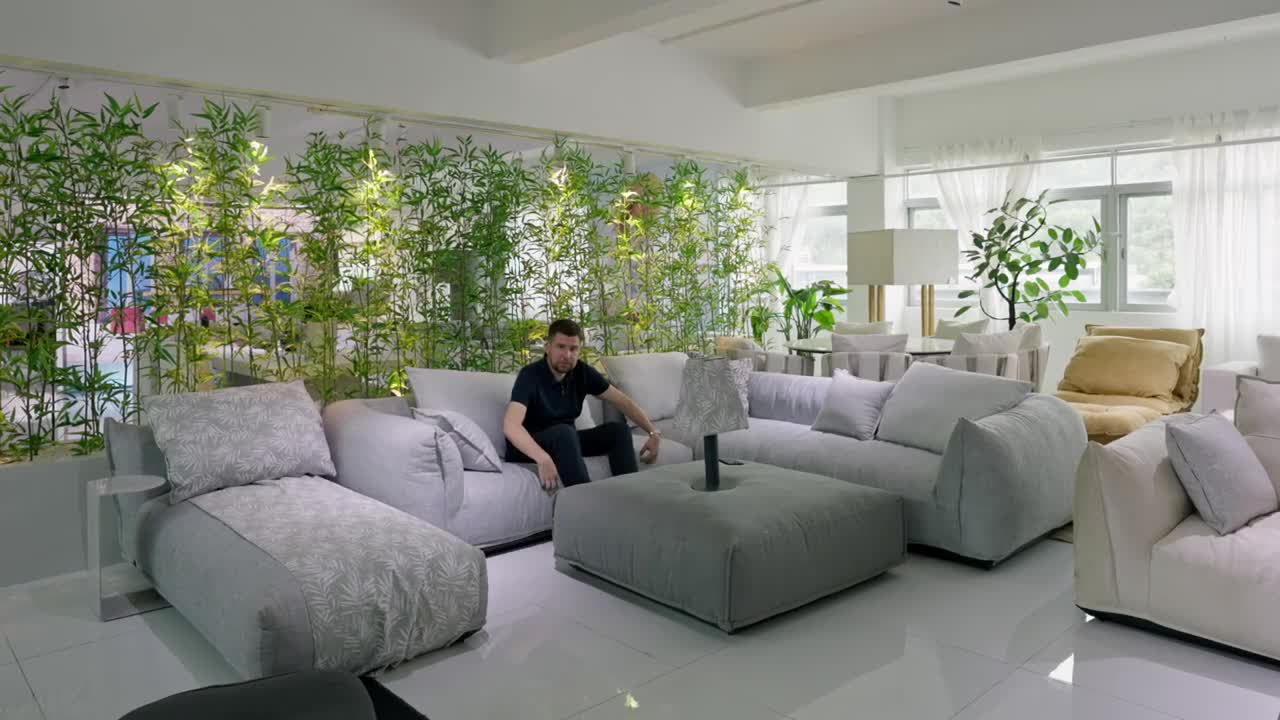
This was our first visit to this factory. A hundred kilometres from our office in Foshan, an hour and a half's drive — and it turned out the factory works only by the container: the minimum order is one container of outdoor furniture. We had to spend a long time explaining to the European management how our business works and why a client needs one set for a terrace, not a truckload. They agreed: they'll make an exception for us and work on individual projects.
Here's what's there and what to look for if you're putting together an outdoor area.
Why this furniture doesn't look like outdoor furniture
Первое, что бросается в глаза в шоуруме, — она не похожа на садовую. Глубокие modular sofas, мягкая посадка, плотный textile. Владелец производства и главный дизайнер — голландцы, и вся линейка сделана по европейским лекалам: выдержана высота посадки, глубина, пропорции подлокотников. Concept у компании простая: перенести гостиную на улицу, чтобы сад стал продолжением дома.
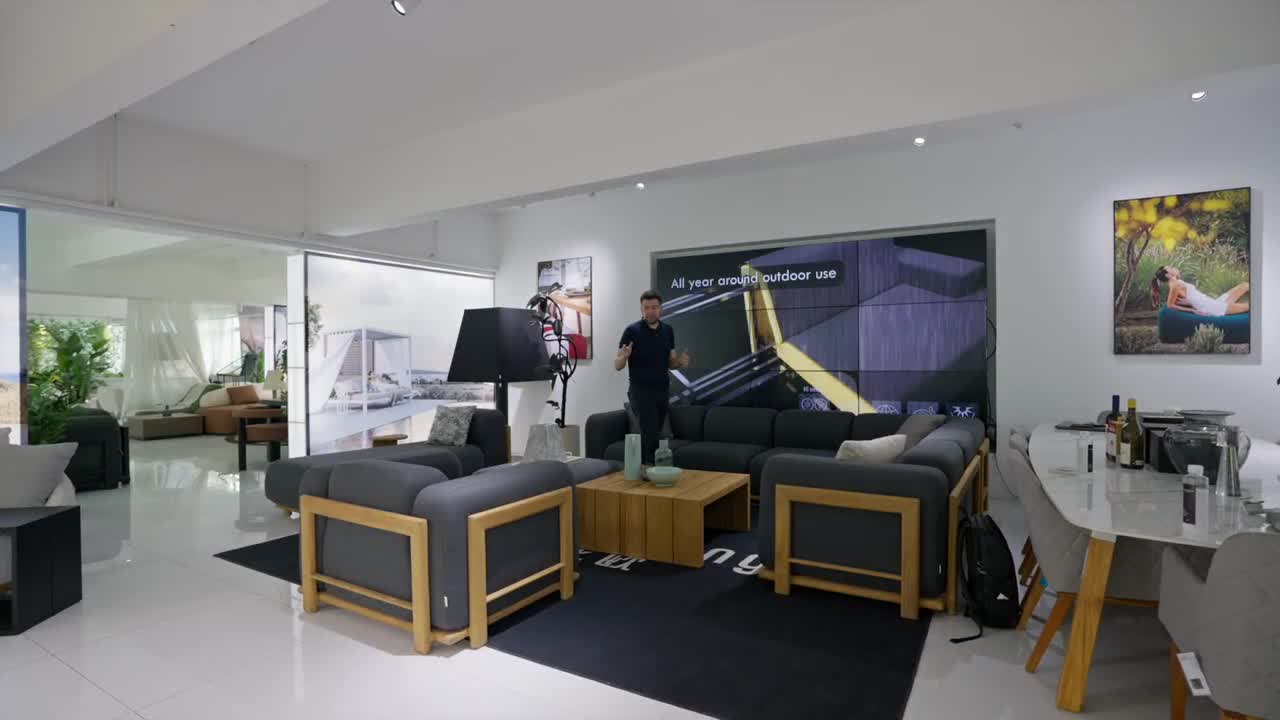
The furniture goes to Europe, Australia and the Middle East, with some staying in China. There are almost no shipments to the USA — trade tariffs get in the way.
Textiles and padding: the main thing that sets outdoor furniture apart
The textiles here are moisture-resistant, and the padding is made so that water passes through the top layer very quickly and drains away. After rain you can sit on the sofa almost immediately. In the sun such a piece doesn't get hot — that's dedicated work with materials, not just "outdoor fabric".
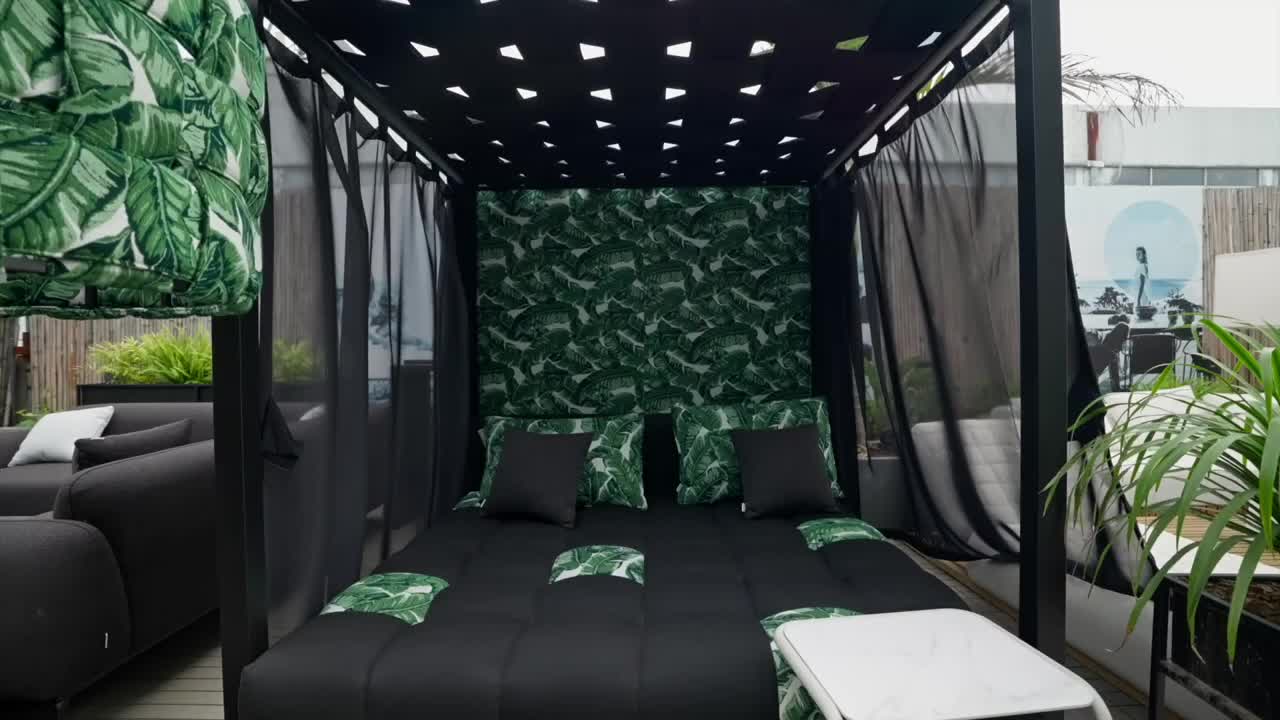
The second point is frames. Hotel pools usually have loungers of simple rattan, and such a frame really burns your legs in the heat. Here they use aluminium and designs with no rigid frame under the seat at all. A small thing that decides whether you'll actually use this furniture or avoid it at midday.
Teak: what it looks like after three years
Part of the line is built on natural teak frames: solid tables, armchairs, compact sets. Teak is coated with a protective layer, but it still turns grey over time — that's normal behaviour for the wood, not a defect. We deliberately went up to the roof of the production building, where pieces have stood in the open for more than two or three years. The wood had taken on an even grey tone and looks nobler than new. If you order teak, plan for this in the project from the start.
Details worth asking for
- Seat heating. The manufacturer can install it on every module, with a joystick control. About $200 per piece. Not an obvious feature, but a pleasant one for a cold autumn.
- Ceramic and sintered stone tabletops. Used often and withstand outdoor conditions better than wood.
- Canvas covers. Ordered from the same factory. Outdoor furniture lasts 7–10 years, and a cover is the cheapest way to reach the upper end of that range.
- Modularity. Sofas and loungers detach into modules, so they're easy to rearrange around the terrace and combine into different compositions from one-, two- and three-seat sections.
The manufacturer's warranty is 5 years. That's a lot for outdoor furniture: such furniture typically lasts 7–10 years.
Who is behind it
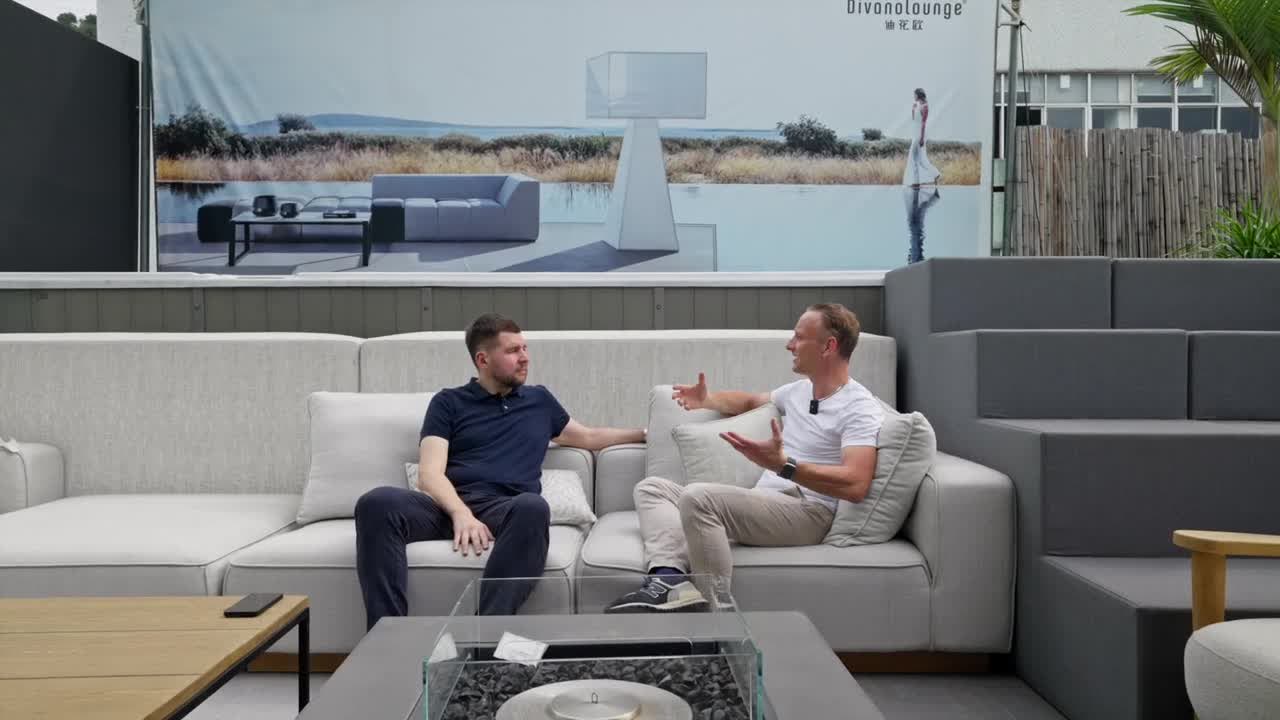
The company's sales director is Dutch, with 25 years in furniture. He started in Indonesia in the teak forests, then spent 15 years in Vietnam working on upholstered furniture and upholstery textiles, and now works in China. The factory is ten years old, and its products are sold by major European furniture chains — hence both the quality requirements and the clean production, which we walked through floor by floor.
What this means for your project
The outdoor area is the part of a project where savings show fastest: cheap fabric fades in a season, the frame rusts, the padding holds water. If you're shipping furniture ten thousand kilometres, it makes sense to ship something worth it.
Send us a list of items or your terrace design project — we'll calculate the cost including production and turnkey delivery. An estimate of 15 items is free.


